
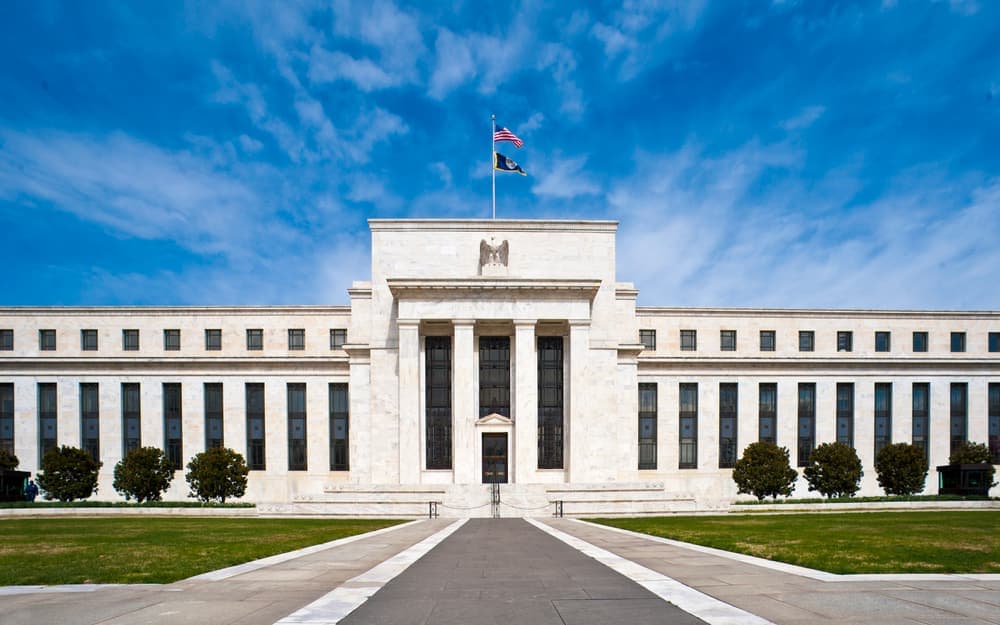
Trump Says U.S. Growth Could Hit 20%, a Level Seen Once Since WWII
Trump's Growth Claim
President Donald Trump said the U.S. economy could grow at a 20% annual rate, a level that has been reached only once since World War II, according to a report from CNBC. He made the remarks while arguing that rapid growth should not prompt the Federal Reserve to raise interest rates, even as inflation remains above the central bank's 2% target.
The president's comments come at a time when the Fed is weighing how to respond to an economy that has shown resilience but also persistent price pressures. The last time U.S. gross domestic product expanded at a 20% pace was in 1984, during the recovery from the early-1980s recession, according to historical data cited in the report. That surge was driven by a sharp rebound from a deep downturn, not by sustained long-term growth.
Trump's assertion that growth could hit 20% is far above the roughly 2% to 3% annual growth that most economists consider the U.S. economy's long-run potential. Even the fastest quarters in recent decades, such as the 33% annualized surge in the third quarter of 2020 as the economy reopened from pandemic shutdowns, were temporary rebounds rather than sustainable trends. The 1984 episode, while remarkable, followed a severe contraction and was aided by aggressive monetary easing.
The Fed's Dilemma
The president's comments highlight a tension between the White House and the Federal Reserve over how to manage monetary policy. The Fed has a dual mandate to promote maximum employment and stable prices, with a 2% inflation target. When inflation runs above that target, the central bank typically raises interest rates to cool demand and bring price increases back in line. But Trump has repeatedly called for lower rates, arguing that strong growth should not be penalized.
According to the CNBC report, Trump specifically argued that rapid growth should not prompt rate hikes, even with inflation above target. This puts him at odds with the Fed's traditional playbook, which holds that if the economy is growing too fast and inflation is rising, the central bank should tighten policy to prevent overheating. The Fed's decisions affect borrowing costs for mortgages, credit cards, and business loans, so any shift in policy has direct consequences for American households and companies.
For everyday Americans, the Fed's rate path influences the cost of financing a home, a car, or a small business expansion. Higher rates can slow economic activity and cool inflation, but they also make borrowing more expensive. Lower rates can spur spending and investment, but they risk letting inflation run hotter, eroding purchasing power. The president's suggestion that growth should not trigger hikes implies he prioritizes growth over inflation control, a stance that could lead to a more accommodative Fed if policymakers were to follow his advice.
Historical Context
The only post-war instance of 20% growth occurred in 1984, when the U.S. economy expanded at a 20.1% annual rate in the second quarter, according to data from the Bureau of Economic Analysis. That quarter was part of a strong recovery from the 1981-82 recession, which had been induced by the Fed under Paul Volcker to break double-digit inflation. Once the Fed cut rates, the economy rebounded sharply, and GDP grew at double-digit annual rates for several quarters.
Since then, no quarter has come close to that pace outside of the pandemic rebound. The 2020 third quarter saw a 33.4% annualized increase, but that was a statistical artifact of the massive contraction in the prior quarter, not a sign of sustainable growth. In normal times, U.S. GDP growth rarely exceeds 5% on an annualized basis, and even that is considered strong. The long-run average since 1947 is about 3.2% per year.
Economists generally view growth rates above 4% as unsustainable without triggering inflation, because the economy's productive capacity is limited by labor, capital, and productivity. A 20% growth rate would require an extraordinary surge in output, far beyond what the U.S. has ever achieved outside of recovery from a deep slump. The president's comment may be rhetorical, but it underscores the gap between political aspirations and economic reality.
Implications for Rates and Markets
If the Fed were to hold rates steady or cut them in the face of above-target inflation, it could signal a shift in the central bank's independence. The Fed is designed to be insulated from political pressure, and its credibility depends on its willingness to act against inflation even when it is unpopular. Markets watch the Fed's every move, and any hint that policy is being influenced by the White House could affect bond yields, the dollar, and stock prices.
For investors, the key question is whether the Fed will prioritize growth or inflation. If the Fed keeps rates low to support growth, inflation could become entrenched, forcing a more painful tightening later. If it raises rates to fight inflation, growth could slow, potentially leading to a recession. The president's comments add to the uncertainty, but they do not change the Fed's mandate or its decision-making process, which is based on economic data and its own forecasts.
American households and businesses will feel the effects through interest rates on loans and savings. A prolonged period of low rates could make borrowing cheaper but also reduce returns on savings accounts and bonds. Higher rates would do the opposite. The Fed's next moves will depend on incoming data on inflation, employment, and economic growth, not on presidential statements, though such statements can influence market sentiment.
What to Watch
The president's remarks are unlikely to directly alter Fed policy, but they highlight the ongoing debate over how fast the economy can grow without fueling inflation. The Fed's preferred inflation gauge, the personal consumption expenditures price index, has been running above 2% for some time, according to the report. The central bank has signaled it will keep rates at current levels until it is confident inflation is moving sustainably toward its target.
For now, the U.S. economy continues to expand, with unemployment low and consumer spending resilient. Whether growth can reach the levels the president suggests is doubtful, but the discussion itself reflects a broader political and economic argument about the trade-offs between growth and price stability. As the Fed prepares for its next meeting, investors and consumers will be watching for any shift in its language or actions.
In the end, the president's 20% growth claim is more a statement of ambition than a forecast. It serves to pressure the Fed to keep rates low, but it runs against historical experience and economic fundamentals. The Fed's job is to balance growth and inflation, and it will likely continue to do so based on data, not political pressure. For Americans, the practical takeaway is that interest rates, and the cost of borrowing, will depend on how the central bank navigates this tension in the months ahead.
Source: CNBC Top News
This article is for information only and is not investment advice, a recommendation, or an offer to buy or sell any security. Figures are sourced from third-party market data providers and may be delayed. Do your own research before investing.