
What Is Happening This Week
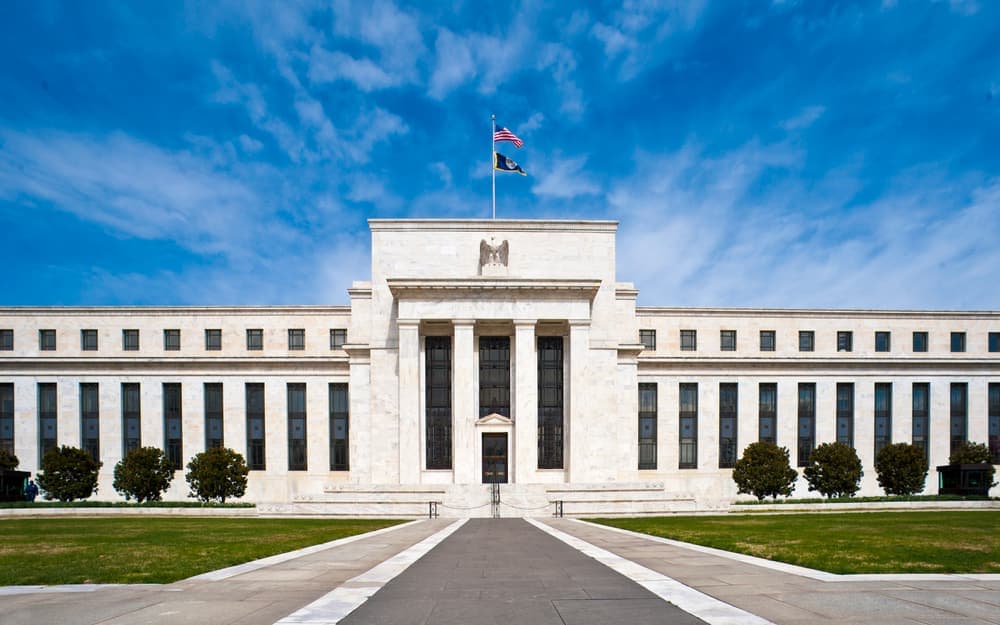
A Federal Reserve meeting and a heavy schedule of industry conferences are the two developments CNBC says it is watching in the United States stock market this week, according to a report published Sunday.
The report describes the Fed gathering as promising to be consequential and notes that a slew of conferences is also on the calendar. Those are the two items the outlet flagged as the things it is watching. The report does not specify which conferences are scheduled, which companies or sectors they cover, or what the Fed is expected to decide.
That is the whole of the reported development: two calendar items, one of them a central bank meeting, the other a cluster of business gatherings. Everything below is context about why those two kinds of events tend to matter to American households and businesses, not new information about this particular week.
Why a Fed Meeting Reaches Beyond Wall Street
The Federal Reserve sets the target range for the federal funds rate, the overnight rate at which banks lend to one another. That single rate feeds into a wide range of borrowing costs across the American economy. Credit card rates, home equity lines of credit, auto loan rates and many business loans are typically tied to short-term benchmarks that move with Fed policy.
When the Fed changes its target range, the effect is usually felt first in short-term borrowing and then, more slowly, in longer-term costs such as mortgage rates. Mortgage rates are influenced by the Fed's policy path but also by inflation expectations, the supply of mortgage-backed securities and the demand from bond investors, so they do not move in lockstep with the Fed's decisions.
The Fed also publishes a policy statement and, at many meetings, updated economic projections from its officials. Those projections include individual estimates for where the federal funds rate, economic growth, unemployment and inflation are heading. Market participants read those projections closely because they show how the officials themselves see the path ahead, not just the decision made that day.
A press conference with the Fed chair typically follows the statement. The questions asked there and the answers given often move asset prices more than the statement itself, because the chair can clarify how the committee is weighing risks.
For an American reader, the practical relevance is straightforward. If you hold a credit card balance, are shopping for a car loan, are considering a home purchase or refinance, or run a small business that relies on a line of credit, the cost of that borrowing is connected to what the Fed does and signals. If you hold savings in a money market fund or a high-yield savings account, those yields are also tied to short-term rates.
Why a Cluster of Conferences Can Move Individual Stocks
Industry conferences matter to markets for a different reason. They are scheduled moments when public companies speak to investors, analysts and journalists in a less formal setting than a quarterly earnings call.
At these events, executives sometimes update guidance, describe demand trends, discuss capital spending plans or answer questions about competitive pressures. A single comment at a conference can change how the market values a company's shares, because it can shift expectations about revenue, margins or costs before the next earnings report is released.
Conference season also tends to concentrate news in particular sectors. Technology, health care, energy and retail each have their own recurring gatherings where a large share of an industry's management teams appear in the same week. When that happens, themes emerge quickly. If several companies describe the same slowdown or the same pickup in orders, the market may read it as an industry-wide signal rather than a company-specific one.
For readers who own individual stocks or sector funds, conference weeks are periods when headlines about a single company can spill over into its peers. For readers who own broad index funds, the effect is usually smaller and more diffuse, because a single company's move is diluted across hundreds of holdings.
How the Two Interact
A Fed meeting and a conference week can amplify each other. When the Fed is in the news, investors tend to reassess how much they are willing to pay for future corporate earnings. Higher interest rates reduce the present value of profits expected far in the future, which is one reason rate-sensitive sectors such as technology can react sharply to Fed news.
At the same time, company commentary at conferences gives investors a read on current business conditions. If executives describe resilient demand while the Fed signals a higher-for-longer rate path, the two pieces of information can pull markets in different directions. If executives describe weakening demand at the same time the Fed signals caution about the economy, the combination can reinforce a single narrative.
Neither the CNBC report nor this article makes a claim about which way any of that will go. The report simply identifies the two items it is watching.
What to Watch For
For readers following along, the Fed's statement and any updated projections are the concrete, scheduled outputs. The chair's press conference is where the reasoning behind the decision is usually explained. On the conference side, the news is less predictable: it arrives in the form of executive remarks, revised outlooks and question-and-answer sessions rather than a single scheduled document.
It is worth keeping in mind what a Fed meeting does not do. It does not set mortgage rates directly, it does not set credit card rates directly, and it does not determine the stock market's level. It sets a short-term policy rate and communicates how officials are thinking about the economy. Markets and lenders then translate that into the prices and rates that households and businesses actually face.
Similarly, a conference appearance is not an earnings report. Remarks made at an industry event may be preliminary, may cover only part of a business, and may be revised later. Treating a single comment as a full picture of a company's prospects is a common source of error.
The week's significance, then, is mostly about information. A Fed meeting supplies a scheduled, structured update on monetary policy. A conference slate supplies a stream of less structured updates from companies. Together they give American investors and households a fresh set of inputs at roughly the same time, which is why the outlet flagged them as the two things to watch.
Source: CNBC Top News
This article is for information only and is not investment advice, a recommendation, or an offer to buy or sell any security. Figures are sourced from third-party market data providers and may be delayed. Do your own research before investing.